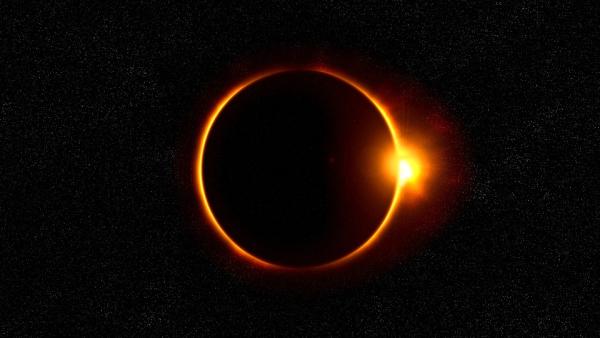
Howard Singer, chief scientist at the Space Weather Prediction Center, considers the three sun-focused missions occurring over the next few years to be transformative. The Parker Probe, the Daniel K. Inouye Solar Telescope (DKIST), and the Solar Orbiter will embark on separate missions to create a better understanding of the star at the center of our system. Continue reading →
If you haven’t seen the Earth’s aurora borealis in person, you’ve seen pictures – majestic colors that light up the night sky. Planet Earth has so many unique features, like our surface water and abundance of constantly evolving life. But the lights of an aurora? We aren’t the only planet that can boast about them. Did you know that Saturn also produces the phenomenon? However, there’s something different about them. But before we get into that, how does this kind of light show occur in the first place? Here’s a clue: it involves magnets. Continue reading →
Mars may just be the best magician yet. We know that Mars doesn’t possess a magnetic field comparable to Earth’s, but scientists have been researching for years to determine what caused the magnetic field’s’ disappearance. A recent study may have given us insight on how Mars’ magnetic field vanished over four billion years ago. But there’s a plot twist: this theory includes self-sabotage. Continue reading →
If you haven’t seen the Aurora Borealis, better known as the Northern Lights, you’re missing out. This explosion of light and color dancing across the sky is truly one of the great wonders of the solar system. But where does this phenomenon come from? The answer may be a physical rule-breaker called magnetic reconnection. Continue reading →
Research presented at the annual meeting of the American Astronomical Society’s Division for Planetary Sciences has drawn our attention to Mars’ unique magnetic tail and the way magnetic fields, both on the planet and from solar winds, are affecting the tail’s movements. The findings may also help scientists better understand how Mars lost much of its atmosphere. Continue reading →
Earth’s core is mostly comprised of iron, with a solid inner core and a molten outer core. Iron is ferromagnetic at ordinary temperatures. However, iron alone does not make for a great magnetic field. It turns out iron gets some pretty crucial help from an old, elementary fried—nickel. Continue reading →
While last month’s solar eclipse was an unforgettable events for many Americans, most didn’t realize the sun had another trick up its sleeve. The first week of September saw a massive geomagnetic storm raging over the northern United States and southern Canada. While the storm caused some radio and navigation disruptions, it did treat many to a rare sighting of the northern lights, or aurora borealis. Continue reading →
Editor’s note: this post was written ahead of the total solar eclipse of Monday, August 21, 2017, and has been left in its original voice. The Great American Eclipse will be viewable across the country at different times depending on your location. You can see a full map and times of full obscurity here. But what exactly happens during a full eclipse? Continue reading →
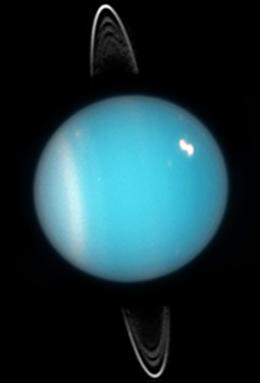
One of the greatest things about our solar system is that every single planet is unique. From Saturn’s magnificent rings to sulfuric acid of Venus’s atmosphere to Earth’s ability to sustain life. In addition, some planets offer fascinating magnetism. Our own magnetic field keeps us safe from harmful radiation and creates stunning aurorae. Jupiter’s magnetic field has the largest magnetosphere of any planet in the solar system! Continue reading →
The Bermuda Triangle is notorious for strange phenomena and mysteries. While it’s probably more myth than fact, this peculiar part of the globe has captivated our imaginations for years. Well, those of us in the magnet biz have our own version—Russia’s Kursk Magnetic Anomaly. Continue reading →

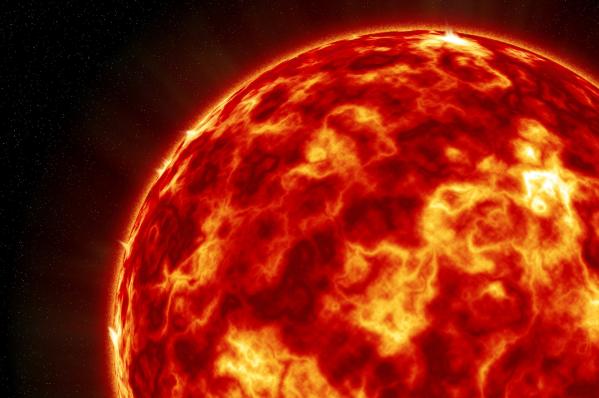 Howard Singer, chief scientist at the Space Weather Prediction Center, considers the three sun-focused missions occurring over the next few years to be transformative. The Parker Probe, the Daniel K. Inouye Solar Telescope (DKIST), and the Solar Orbiter will embark on separate missions to create a better understanding of the star at the center of our system. Continue reading →
 If you haven’t seen the Earth’s aurora borealis in person, you’ve seen pictures – majestic colors that light up the night sky. Planet Earth has so many unique features, like our surface water and abundance of constantly evolving life. But the lights of an aurora? We aren’t the only planet that can boast about them. Did you know that Saturn also produces the phenomenon? However, there’s something different about them. But before we get into that, how does this kind of light show occur in the first place? Here’s a clue: it involves magnets. Continue reading →
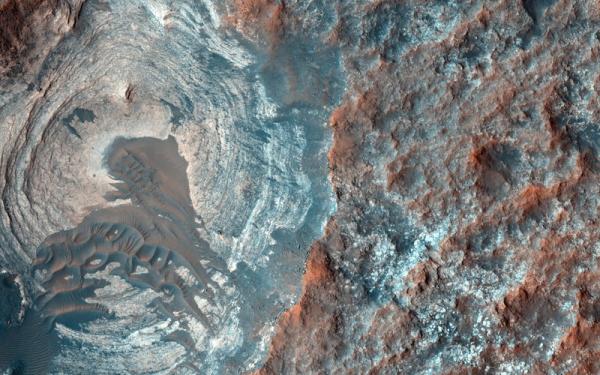 Mars may just be the best magician yet. We know that Mars doesn’t possess a magnetic field comparable to Earth’s, but scientists have been researching for years to determine what caused the magnetic field’s’ disappearance. A recent study may have given us insight on how Mars’ magnetic field vanished over four billion years ago. But there’s a plot twist: this theory includes self-sabotage. Continue reading →
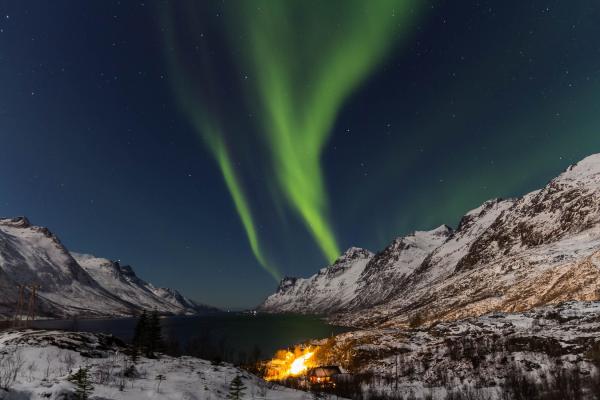 If you haven’t seen the Aurora Borealis, better known as the Northern Lights, you’re missing out. This explosion of light and color dancing across the sky is truly one of the great wonders of the solar system. But where does this phenomenon come from? The answer may be a physical rule-breaker called magnetic reconnection. Continue reading →
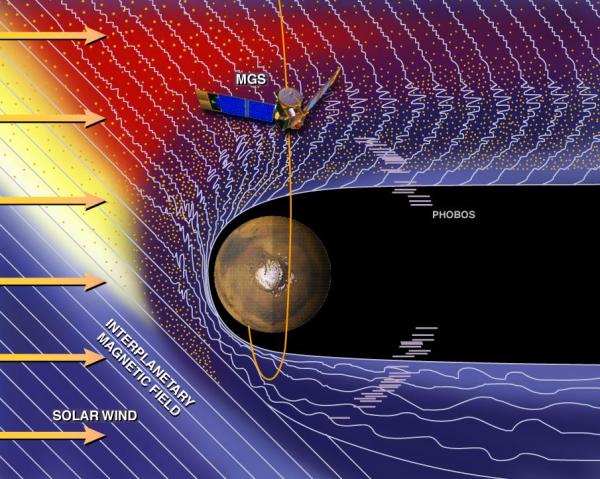 Research presented at the annual meeting of the American Astronomical Society’s Division for Planetary Sciences has drawn our attention to Mars’ unique magnetic tail and the way magnetic fields, both on the planet and from solar winds, are affecting the tail’s movements. The findings may also help scientists better understand how Mars lost much of its atmosphere. Continue reading →
 Earth’s core is mostly comprised of iron, with a solid inner core and a molten outer core. Iron is ferromagnetic at ordinary temperatures. However, iron alone does not make for a great magnetic field. It turns out iron gets some pretty crucial help from an old, elementary fried—nickel. Continue reading →